
Breast augmentation surgery is a surgical procedure performed to increase breast volume and balance body proportions. Usually carried out using silicone implants, the procedure makes the breasts appear fuller and more shapely. To achieve results that are compatible with the natural body structure, planning is done by taking the individual's body measurements and aesthetic expectations into account. It can have positive effects not only on physical appearance but also on self-confidence.
Breast augmentation is an aesthetic surgical procedure performed to enhance breast volume and achieve a more aesthetically pleasing appearance. This surgery is often sought to give the breasts a fuller, more symmetrical, and ideally shaped form.
Various reasons such as congenital asymmetry, volume loss after pregnancy or breastfeeding, weight fluctuations, or aging may lead individuals to consider breast augmentation surgery. As one of the most preferred aesthetic procedures among women, breast augmentation is an effective solution to eliminate aesthetic concerns, boost self-confidence, and create a body contour that is more harmonious overall.
During breast augmentation surgery, implants are placed in the breast tissue to provide a long-lasting solution and help achieve a natural appearance. However, to reach aesthetically pleasing and natural-looking results, the procedure must be planned with a personalized approach. In the planning phase, factors such as the individual’s body structure, aesthetic expectations, skin type, and overall health condition are taken into account. The size, shape, and placement of the implants are also essential components of the personalized planning process.
Breast augmentation does not only result in physical change. Achieving an appearance that aligns with aesthetic expectations enhances self-confidence and improves overall quality of life. Performed with modern surgical techniques, breast augmentation is a safe and effective option for individuals who desire more balanced and aesthetically pleasing body contours.
Breast augmentation is performed under general anesthesia and involves the insertion of silicone implants to increase breast volume. The type, size, and placement method of the implant are determined prior to the operation after evaluating the patient’s expectations and anatomical features.
During the procedure, implants are carefully inserted either under the breast tissue or beneath the chest muscle. Surgical incisions are typically made under the breast, in the armpit, or around the areola.
The silicone gel material used in the implants is widely preferred for its safety and natural feel. The surgery typically takes between 2 to 5 hours. After the procedure is completed, the patient is kept under clinical observation for a certain period to ensure a healthy recovery process. During this time, the patient is monitored, the surgical area is evaluated, and measures are taken to minimize the risk of complications. All steps are followed by expert healthcare professionals to ensure the best aesthetic and medical outcomes.
2-5 Hours
5-7 Days
8 Days
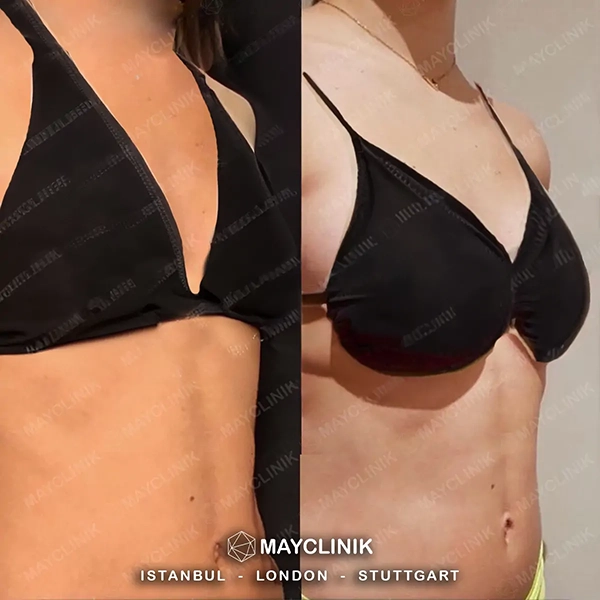
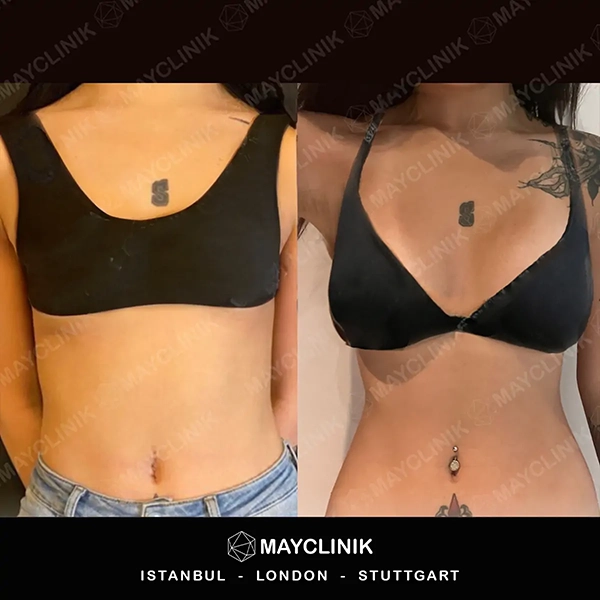
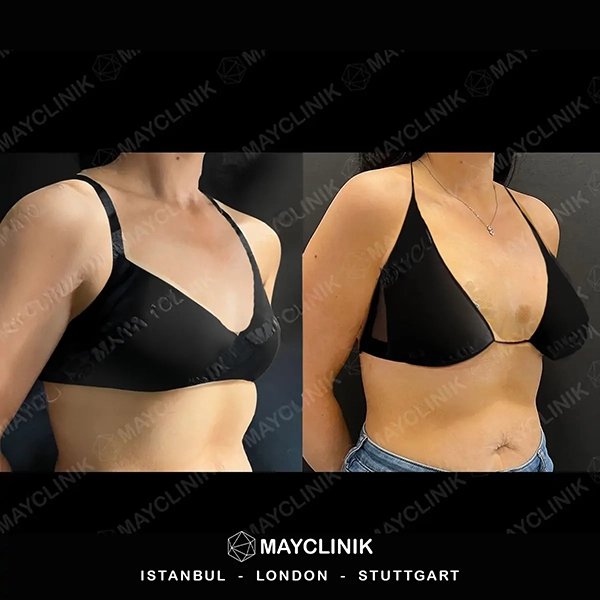
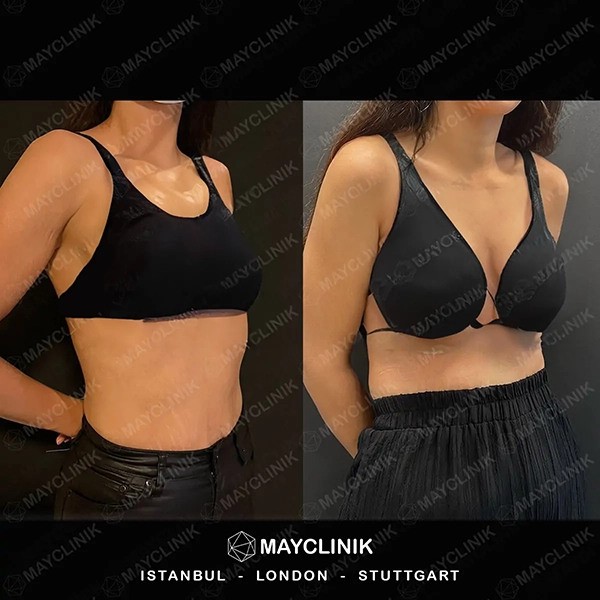
The most commonly used method in breast augmentation procedures is silicone implants. Available in various sizes, shapes, and textures, silicone implants offer a wide range of options tailored to individual needs and preferences.
Teardrop-shaped implants create a natural breast contour and offer a more aesthetic appearance. Round implants enhance the fullness in the upper part of the breast, providing a more prominent and voluminous look.
The placement position of the implants is determined based on the individual’s body structure, skin quality, and aesthetic goals. Techniques such as submuscular (under the muscle), subglandular (above the muscle), or dual plane placement may be used. The implant’s surface texture—whether smooth or textured—is also selected based on the patient’s needs and medical requirements. All of these elements are planned through detailed consultations between the patient and the surgeon. Every aspect is carefully evaluated to enhance patient satisfaction and ensure successful surgical outcomes. A personalized approach is adopted by considering both aesthetic goals and anatomical requirements.

Breast augmentation is suitable for individuals who are dissatisfied with their breast volume, have asymmetry in their breasts, or experience volume loss due to aging. It is also beneficial for those who wish to restore volume and achieve a more aesthetic appearance after breastfeeding.
Additionally, individuals who have completed physical development and are in good general health are considered suitable candidates. Breast augmentation can help individuals feel more at peace with their bodies and positively influence psychological well-being. Having realistic expectations and clear communication with the surgeon increases satisfaction with the procedure.
The most important aspect before surgery is a detailed examination and clearly defining personal expectations regarding the results. The patient’s suitability for the operation is determined by evaluating their overall health status. All medications in use, any known allergies, and previous surgeries should be shared with the surgeon.
Patients who smoke are strongly advised to quit smoking prior to surgery, as this positively affects the healing process. Imaging tests like breast ultrasound or mammography may also be conducted beforehand to analyze the condition of the breast tissue.
The duration of breast augmentation surgery varies depending on the technique used and the patient’s anatomy. On average, the procedure is completed within 2 to 5 hours. Prior to the surgery, the surgeon conducts all necessary measurements and planning, determines the incision site, and performs the procedure accordingly. After the implant is placed, the incision is carefully closed and bandaged. Factors such as the patient’s response to anesthesia and intraoperative developments can also affect the surgery duration.
The cost of breast augmentation may vary depending on the type of implant used, the scope of the operation, and whether it is combined with other aesthetic procedures. Since each individual’s needs differ, an exact cost can only be determined after a personalized evaluation. Other factors that influence the cost include the surgeon’s experience, the hospital infrastructure, and the quality of care provided. For the most accurate and up-to-date information, consultation with a qualified aesthetic surgeon is essential.
Choosing the right clinic for breast augmentation is crucial for the success of the outcome. Our expert team, patient-centered approach, and modern facilities make us a leading name in breast aesthetics. With personalized treatment plans and internationally standardized service quality, we are the ideal choice to help you safely achieve your aesthetic goals.
When breast augmentation surgery is performed with the right technique and personalized planning, it is possible to achieve a natural appearance. For natural results, the breast structure, skin elasticity, body measurements, and the patient’s expectations are evaluated together. The size, shape, and placement of the implants are determined accordingly.
Implants placed under the muscle generally create a more natural profile with smoother transitions. Teardrop-shaped (anatomical) implants are also preferred as an alternative designed to mimic the natural breast shape. With the right surgical technique and an experienced team, results that are indistinguishable from natural breasts, compatible with the body, and aesthetically balanced can be achieved.
Breastfeeding is usually possible after breast augmentation surgery. A careful surgical approach is adopted to avoid damaging the milk ducts and breast tissue during the procedure. Since implants are typically placed under the breast tissue or under the muscle, the milk production and delivery mechanisms can be preserved without being affected.
Although breastfeeding function is preserved in most cases, a personal evaluation is essential for definite information. As every individual’s anatomy and breast tissue condition differs, this issue should be discussed in detail before the surgery. This allows the surgeon to determine the incision site and implant placement accordingly, especially for individuals who plan to breastfeed.
The recovery process after breast augmentation surgery varies from person to person, but patients typically return to their normal activities within a few weeks. Mild pain, swelling, and sensitivity may occur during the first few days following the operation. Wearing the recommended compression garment and adequate rest support the healing process. Full recovery, including the complete adaptation of the implants to the body and the settling of tissues, may take several months. Therefore, it is advisable to wait 4 to 6 weeks before engaging in physically demanding activities or sports. During this period, it is important to follow the surgeon's instructions regarding activity limitations, medication use, and wound care. With attentive care and patience, the desired aesthetic results can be achieved once the healing process is complete.
Modern breast implants are extremely durable and can be used safely for many years. However, they are not guaranteed to last a lifetime. Over time, implant replacement may be needed due to deformation, capsular contracture, sagging, or changes in aesthetic preferences. Some individuals may desire a different breast size or shape years later, while in other cases, implant replacement may be recommended for medical reasons.
Regular check-ups help monitor the condition of the implants and detect any need for replacement early. Although there is no fixed timeline for replacement, it is recommended to have a new evaluation every 10 to 15 years.
The incision techniques used in breast augmentation surgery are generally aimed at minimizing the visibility of scars. Incisions are typically made in concealed areas such as the inframammary fold, around the areola, or in the armpit. Thanks to modern surgical techniques and meticulous suturing, scars fade over time and blend with the skin tone. It is normal for scars to appear red and prominent during the first few months, but this usually decreases over time. The healing speed of scars may vary depending on skin type, genetic factors, and post-operative care. Using sunscreen, recommended scar creams, and paying close attention to wound care are factors that positively influence the healing process.


106 Crawford St, London W1H 2HY
Levent, Zeren Ar. No:6, 34330 Beşiktaş/İstanbul
